Ceferin Will Seek a Fourth Term at UEFA, and Africa’s 54 Federations Back Infantino
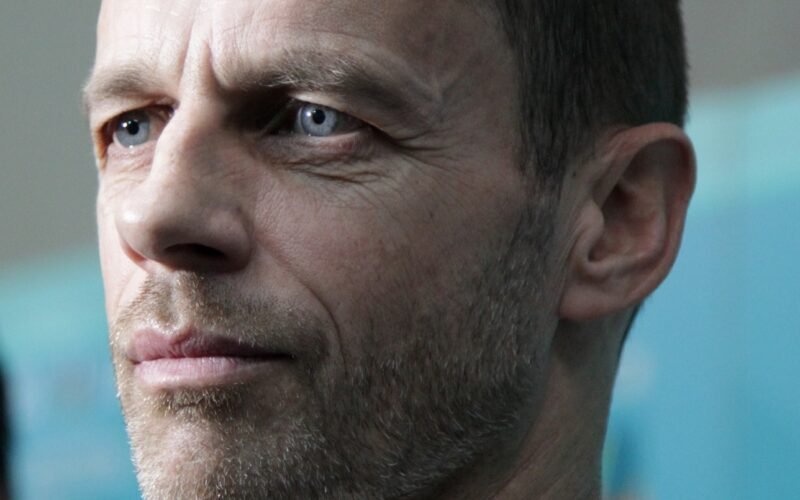
Aleksander Ceferin will stand for a fourth term as UEFA president, which effectively removes one of the most prominent possible challengers to FIFA’s Gianni Infantino from the race. On Thursday, 8 October, the Slovenian told the presidents and general secretaries of all 55 European national associations in Berlin that he would seek re-election, BBC Sport reported. On the same day, Concacaf’s Victor Montagliani was reported to be preparing to seek a final term at his own confederation rather than run for FIFA.


For Indian readers who follow the sport mainly through the Indian Super League, the national team’s ranking and the buzz around the next World Cup, this can look like boardroom noise. It is not. The FIFA presidential vote, due on 18 March 2027 in Rabat, Morocco, decides who controls the money and the rules for 211 member federations, the All India Football Federation among them. What happens between now and the candidate deadline of 18 November shapes that vote.
What Ceferin announced in Berlin
Ceferin’s decision had been widely expected, but it reverses a position he took publicly. BBC Sport notes that he had insisted he would not seek re-election, a stance he outlined in February 2024. At that time he was caught up in a row over UEFA changing its statutes to allow him a fourth term. He was first elected in 2016.
UEFA’s own statement says the 55 associations had unanimously asked him to reconsider. The election will be held at the 51st UEFA Ordinary Congress in Astana, Kazakhstan, on 22 April 2027, according to Al Jazeera’s copy of the Associated Press report, which also calls it a “fourth and final term”. If he wins, the Associated Press says, he would serve to 2031.
His own words, quoted by the BBC: “I want to thank the national associations for their trust. We have faced extraordinary challenges over the past years, and we have faced them as one team. There is still important work ahead, and I have therefore accepted their request. My ambition remains the same: to keep European football united, make our game stronger and leave Uefa ready for the next generation.”
He is not running against Infantino
The practical effect is on the FIFA race. Ceferin has ruled out standing against Infantino himself, and Reuters, in a report carried by The Star, described his re-election bid as effectively removing one of the highest-profile figures from the field of potential challengers. The Associated Press goes further: the eventual UEFA-backed candidate “will not be” Ceferin, and “potentially” will not be European either, because the votes are spread across 211 federations worldwide.
That matters for India. Europe holds a large block of votes, but a winning coalition needs Asia, Africa, the Americas and Oceania. A candidate seen as a European project would struggle. UEFA’s published criteria stress someone “deeply rooted in football” with “the ability to command confidence across regions”.
Why Europe wants Infantino out
The trigger was a plan to sell stakes in the World Cup and other tournaments to private investors. The Associated Press describes it as “secretive and quickly defeated”. Infantino scrapped it after a backlash that BBC Sport says came from mostly European and North American nations. Reuters reports that many of those countries have since withdrawn their support for him ahead of the March election.
In August, Infantino was accused of breaking trust “through deception” in an open letter issued by UEFA, Concacaf and the Asian Football Confederation, BBC Sport reports. Al Jazeera adds that the dispute pushed UEFA’s long-held unease with FIFA projects and governance towards running a rival candidate.
The other complaints are about decisions on the field. The Associated Press lists FIFA’s handling of World Cup red-card or eligibility cases involving Cristiano Ronaldo, the United States forward Folarin Balogun and the Congo goalkeeper Lionel Mpasi as having provoked global concern. We covered the Ronaldo side of that in our report on his Portugal ban.
UEFA’s 14-point reform plan
Alongside the Ceferin news, UEFA published a 14-point plan to reform FIFA. UEFA and 54 of its associations backed the direction; Azerbaijan was the exception. The Associated Press says Azerbaijan has pledged its vote to Infantino and that one of his key campaign aides comes from there.
- Appointments and the work of FIFA’s oversight bodies protected from “presidential or executive interference”, including ethics and disciplinary matters.
- “No FIFA resources may be used for personal or electoral interests.”
- At least $10m of additional funding for each of the 211 member associations, which UEFA says would be a one-off dividend from FIFA’s reserves. Al Jazeera puts those reserves at close to $6bn after the men’s World Cup in the United States, Canada and Mexico.
- A clear separation of powers between FIFA’s Congress, Council and Bureau, according to Inside World Football.
The $10m figure is aimed squarely at small and mid-sized federations. Whether the offer persuades them is the open question.
Africa answers with 54 votes of support
While UEFA met in Berlin, Infantino was in Cape Verde at a strategy symposium for African football. Reuters reports that all 54 member associations of the Confederation of African Football pledged unconditional support for his re-election. CAF president Patrice Motsepe told delegates: “There is a unanimous decision by the 54 CAF member associations to unconditionally support Gianni as president of FIFA. This is because of the history and the support that Gianni has given to African football.”
Infantino reminded delegates of the money. “With the FIFA Forward programme we have invested one billion dollars in 10 years in Africa, with 124 different projects and many other actions,” he said, adding that when concerns are raised “we have to address them”. That is more than a quarter of the 211 votes, as Reuters notes, publicly lined up behind him five months before the election.
It is the plainest sign of how this contest will be fought. UEFA is arguing governance and integrity. Infantino is pointing to Forward programme funding, which reaches every federation. For smaller associations in Asia, including India’s, the second argument is the one that arrives in a bank account.
Who is left to stand?
As of Thursday there is no confirmed challenger. Ramon Vega, the former Tottenham Hotspur and Switzerland defender, said this week he intends to stand. BBC Sport says it is unclear whether he can gather the five letters of support needed to reach the ballot, and the Associated Press notes he failed to secure the required five federations when he tried in 2019, and that it is unclear whether he meets the rule requiring a recognised football role in two of the past five years.
The other names are fading. BBC Sport reports Montagliani, 61, was seen as a possible candidate but never confirmed he wanted to run, and has told colleagues he will seek a final Concacaf term. The AFC’s Sheikh Salman bin Ibrahim Al Khalifa has, per BBC Sport, recently appeared to soften his stance towards Infantino, who is 56 and seeking a fourth term.
The Associated Press reports that UEFA’s search will not be settled by Ceferin and that a candidate has to be found before 18 November. Our earlier coverage of European football’s politics, including the Manchester City charges verdict, shows how crowded that calendar already is. More on the sport is in our football section, and the Messi farewell report shows the other side of the World Cup cycle.
What happens next
The first test is close. Inside World Football reports a FIFA Council meeting in Zurich next Thursday, and UEFA has said its 55 associations will meet again before the candidacy deadline. Candidates must be in by 18 November, and the vote follows on 18 March in Rabat. Ceferin’s own re-election comes first, on 22 April 2027 in Astana.
Sources: BBC Sport; Al Jazeera / Associated Press; The Star / Reuters; The Straits Times; Business Standard; Inside World Football.
Featured image: UEFA president Aleksander Ceferin at the presentation of the UEFA Euro 2020 logo in Saint Petersburg, Russia. Photo: Кирилл Венедиктов / Wikimedia Commons, CC BY-SA 3.0.
