Kevin Keegan Dies at 75 — England Lost More Than a Football Legend
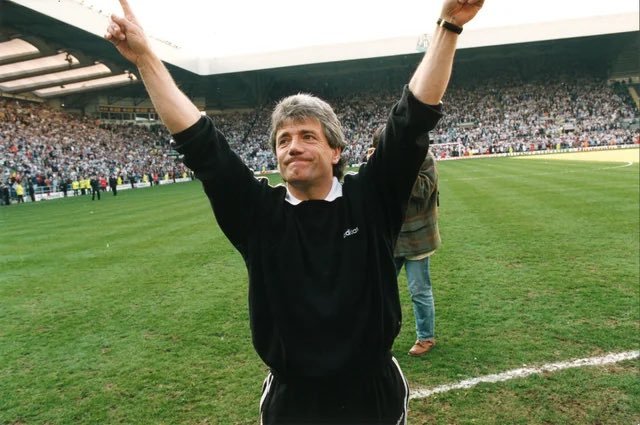
Kevin Keegan, a two-time Ballon d’Or winner and one of the most complete footballers England has produced, died on 20 July 2026 at the age of 75. His family confirmed he had been surrounded by his wife Jean and daughters Laura and Sarah in his final moments, following a battle with stage four cancer that had become public knowledge in January.
The diagnosis had spread to other parts of his body by early summer. Keegan had announced its severity himself — a final act of openness from a man who had never been shy of the spotlight and never once hid behind it either.
A Playing Career Built on Relentless Drive
Keegan arrived at Liverpool in 1971 from Scunthorpe United, a signing that looked modest until it very quickly did not. Over six years at Anfield he made 323 appearances and scored 100 goals — numbers that do not capture the way he pressed, harried and dragged opponents out of shape before most clubs had a word for it. Bill Shankly called him “a Liverpool player born out of his time.” Three First Division titles, the 1977 European Cup, an FA Cup and two UEFA Cups followed.
He left for Hamburg in 1977 at the peak of his powers and won back-to-back Ballon d’Or awards in 1978 and 1979, becoming the only English player ever to claim consecutive wins. In Germany he was not a foreign import coasting on reputation — he was their best player. That competitive ferocity defined him throughout stops at Southampton and then Newcastle United, where he retired in 1984 to a reception at St James’ Park that bordered on civic hysteria.
The Manager Who Made Newcastle Dream
His managerial career at Newcastle — two separate spells, each with its own particular electricity — produced football that supporters still describe in the present tense. The first spell, from 1992 to 1997, turned a club that had narrowly avoided relegation to the third tier into genuine title contenders. The 1995–96 team that led the Premier League by twelve points in January before Arsenal, not Manchester United, chipped the gap down through patience and structure, remains one of the most discussed nearly-teams in English football history.
The “I would love it” outburst aimed at Alex Ferguson in April 1996 has been replayed so often it risks flattening into caricature. It should not. It was a manager running on nerve and conviction, managing a club whose identity he had rebuilt from scratch, speaking without a filter in a sport rapidly learning to use them constantly. His honesty was his greatest strength and, in management, sometimes his greatest vulnerability.
His 18 months as England manager between 1999 and 2000 ended with a 1–0 home defeat to Germany at the old Wembley — the last competitive international played there before demolition. He resigned in the dressing room toilet shortly afterwards. It was a blunt ending to a chapter that never quite found its shape, but it did not diminish what came before it. The World Cup has just crowned a new champion — a reminder that the game moves on, but its great figures leave impressions that do not.
What Made Him Different
Keegan was the rare player who improved the atmosphere of every club he joined. At Liverpool he was the link between Shankly’s vision and Bob Paisley’s trophies. At Hamburg he carried English football’s reputation into a European context and enhanced it. At Newcastle, as both player and manager, he gave a city back its self-belief. The modern game now trades in record prize pools and global broadcast deals — Keegan belonged to an era when a manager arriving on a horse, as he famously did at St James’ Park to announce his signing in 1982, could shift the mood of a city overnight.
He was born Joseph Kevin Keegan on 14 February 1951 in Armthorpe, Doncaster. He is survived by Jean, his wife of more than fifty years, and their two daughters.
His family have asked for privacy. The football world is unlikely to be quiet for long — and that, too, is a measure of what he meant.
